Buying a used car can save you a considerable amount of money compared with buying new, but it is important to know exactly what you are looking at before agreeing to a deal.
A car can appear immaculate in an advert while hiding worn components, previous accident repairs, mechanical problems or an incomplete history. Following a used car checklist can help you identify potential problems before they become expensive surprises.
This used car checklist covers the main things to check before buying a used car in the UK, from researching its history to inspecting the bodywork, engine, tyres and interior.
Used Car Checklist: Check the Vehicle History First
You don’t have to wait until the viewing to start working through your used car checklist.
Ask the seller for the registration number, make and model and use these details to check that the information in the advert corresponds with official vehicle records.
You can use the GOV.UK vehicle information service to check details including the vehicle’s date of first registration, year of manufacture, engine size, fuel type, CO2 emissions and tax status.
You should also check the car’s MOT history and use the GOV.UK recall checker to find out whether there are outstanding safety recalls.
If the information doesn’t match what the seller has told you, ask why before travelling to see the car.
Check the MOT History
A car’s MOT history can tell you considerably more than whether it currently has a valid MOT.
As part of your used car checklist, look through several years of MOT results rather than only checking the latest test. Pay particular attention to recurring advisories for tyres, corrosion, brakes or suspension components.
Recorded mileage should also increase logically between tests. An unexpected reduction or unexplained discrepancy deserves further investigation.
Remember that an MOT isn’t the same as a comprehensive mechanical inspection. A valid MOT shouldn’t be treated as proof that a used car won’t require repairs.
Consider a Vehicle History Check
A vehicle history check can reveal information that isn’t obvious from simply looking at a car.
Depending on the service used, it may identify whether a vehicle has outstanding finance, has previously been recorded as an insurance write-off or has been reported stolen. It can also provide additional mileage and vehicle identity information.
Including a history check in your used car checklist can be particularly worthwhile before handing over a deposit or making the final payment.
For more general precautions, read our guide to buying a used car safely.
View the Car in Daylight
Whenever possible, inspect a used car during daylight and in dry weather.
Rain and poor lighting can make scratches, dents and differences in paintwork harder to see. Work through your used car checklist around the entire vehicle rather than concentrating only on the areas the seller shows you.
If possible, avoid inspecting a car for the first time at night or in conditions that make its condition difficult to judge.
Used Car Checklist: Check the Bodywork
Stand a few metres away and look along each side of the car.
Look for dents, scratches, rust and differences in paint colour or finish. Variations between adjacent panels can indicate that part of the vehicle has previously been repainted.
Check the gaps around the bonnet, doors and boot. Uneven panel gaps don’t automatically mean a car has been involved in an accident, but they’re worth investigating.
Look around the wheel arches, door edges and sills for corrosion, particularly on older vehicles.
Minor cosmetic damage isn’t necessarily a reason to reject a car, but take the potential repair cost into account.
Look for Signs of Previous Accident Repairs
Previous damage isn’t always immediately obvious.
Alongside mismatched paint and uneven panel gaps, look for overspray on plastic trim or rubber seals. Check that the headlights and rear lights sit correctly and look for unusual welding or distortion in areas you can safely inspect.
A professionally repaired car isn’t automatically a bad purchase. The important thing is knowing what you’re buying and making sure previous damage has been repaired correctly.
If something doesn’t look right, consider having the car professionally inspected before buying.
Inspect the Tyres
Tyres are an important part of any used car checklist because replacing several soon after buying can add significantly to your costs.
Check all four tyres for remaining tread, cracking, cuts, bulges and other visible damage. Uneven wear can sometimes indicate problems with wheel alignment, suspension or tyre pressures.
Note whether any tyres will need replacing soon and check the spare wheel if the vehicle has one, or make sure the supplied tyre repair kit is present.
Check the Wheels and Brakes
Your used car checklist should also include a quick inspection of the wheels and brakes.
Check the wheels for significant kerb damage, cracks or bends and look through the spokes at the brake discs where possible.
During the test drive, the brakes should operate smoothly and the car shouldn’t pull noticeably to one side.
Grinding noises, strong vibration through the pedal or steering wheel, or brakes that don’t feel right should be investigated before buying.
Look Under the Car
Look at the ground underneath the engine and around the car for obvious signs of leaking oil, coolant or other fluids.
From a safe position, look underneath for obvious corrosion, hanging components or damage.
A few drops of clear water after the air conditioning has been running can simply be condensation, so not every patch underneath a car indicates a fault.
Check Under the Bonnet
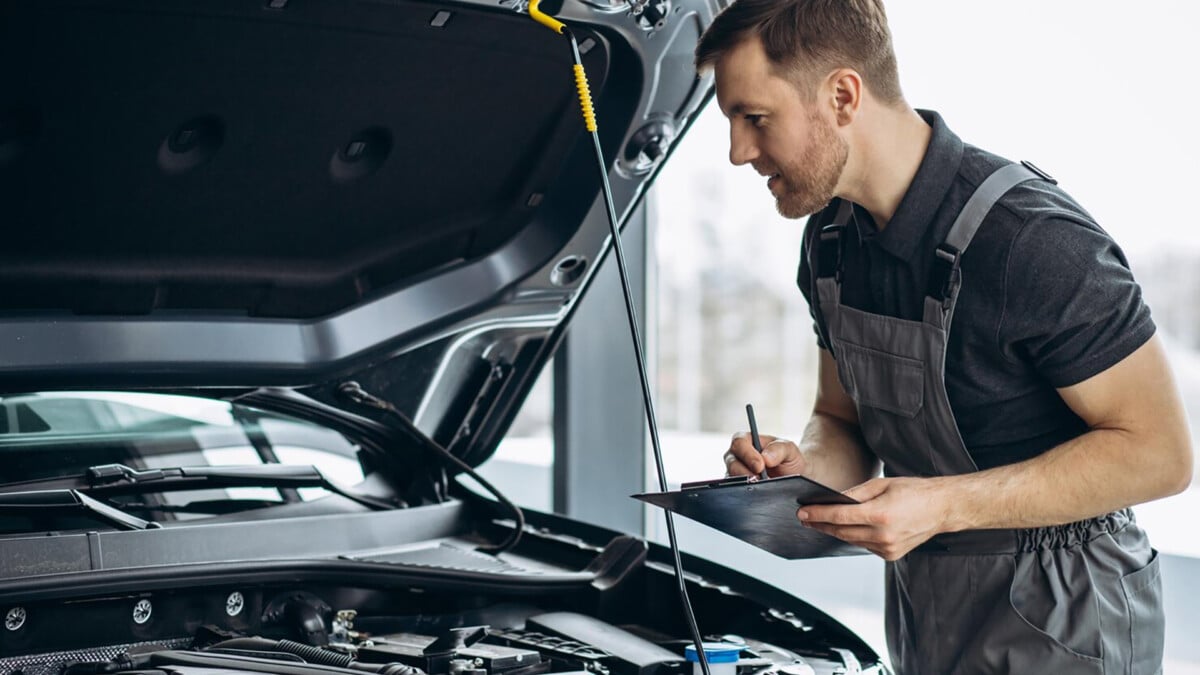
Your used car checklist should include several basic checks under the bonnet, even if you aren’t mechanically minded.
Look for obvious oil or coolant leaks, damaged hoses, loose components and anything that appears unusually wet.
Check the engine oil according to the manufacturer’s procedure where practical and inspect the coolant level when the engine is cold. Never remove a pressurised coolant cap from a hot engine.
If the engine bay has recently been thoroughly cleaned, pay extra attention for signs of leaks that may otherwise be difficult to spot.
Ask to Start the Engine From Cold
If possible, ask the seller not to start the car before you arrive.
Some engine problems are more noticeable during a cold start. Listen for excessive rattling, knocking, squealing or other unusual noises.
Another useful part of your used car checklist is watching the dashboard during startup. Warning lights should illuminate as part of the normal startup procedure and then go out as expected.
A warning light that remains illuminated could indicate a fault requiring further investigation.
Check the Exhaust
Checking the exhaust is another simple addition to your used car checklist.
A small amount of water vapour can be normal when starting a cold engine in cool weather, but persistent or excessive smoke once the engine is warm deserves further investigation.
Listen for unusually loud exhaust noise as well, which could indicate a damaged or leaking exhaust system.
Inspect the Interior
Your used car checklist should also cover the interior, which can provide clues about how the car has been treated.
Check the seats, carpets, dashboard, steering wheel, gear lever and pedals for excessive wear or damage.
Interior wear should make reasonable sense for the car’s age and recorded mileage. Heavy wear on a supposedly very low-mileage car could justify asking additional questions.
Check underneath floor mats for dampness and look for signs of persistent moisture or water leaks.
Test All the Electrical Equipment
Don’t overlook the electrical equipment when completing your used car checklist.
Try the windows, central locking, mirrors, lights, indicators, windscreen wipers, washers, infotainment system and steering-wheel controls.
Test the heater and air conditioning rather than simply accepting that they work. If fitted, also check equipment such as heated seats, parking sensors, reversing cameras, cruise control and electric seats.
Electrical faults can be expensive to repair, particularly on modern cars.
Check the Mileage Against the Condition
Compare the odometer reading with the MOT history, service records and general condition of the vehicle.
As part of your used car checklist, look for consistency rather than considering mileage alone. A higher-mileage car that has been properly maintained can sometimes be preferable to a lower-mileage example with a poor maintenance history.
The mileage recorded at previous MOTs should make sense alongside the current reading. If something doesn’t add up, ask the seller for an explanation.
Used Car Checklist: Check the Service History
Check the vehicle’s service history and look for evidence that maintenance has been carried out at appropriate intervals.
Depending on the age and manufacturer, this might consist of a traditional stamped service book, invoices and receipts or a digital service record.
Receipts can be particularly useful because they show exactly what work was carried out and which parts were replaced.
If the seller describes the car as having a full service history, check what is actually available before relying on that description.
Check the V5C and VIN
Next on your used car checklist is the original V5C registration certificate, commonly called the log book.
Check that its vehicle details match the car and compare the vehicle identification number (VIN) shown on the vehicle with the V5C.
Any unexplained discrepancy between the car, its VIN and its documents should be resolved before you buy.
Remember that the V5C records the vehicle’s registered keeper and isn’t proof of ownership.
Take the Car for a Proper Test Drive
No used car checklist is complete without a proper test drive.
A test drive can reveal problems with the clutch, gearbox, brakes, steering, suspension and engine that aren’t apparent while the car is parked.
Try the car at different speeds and, where safe and appropriate, on different types of road. Pay attention to how easily it starts, how the clutch and gearbox operate, whether the steering pulls to one side and whether there are knocks or rattles from the suspension.
Make sure you’re properly insured before driving the vehicle.
For more detailed advice, read our guide on how to test drive a used car.
Don’t Ignore Small Problems
One minor problem doesn’t necessarily make a used car a poor purchase, but several small problems can quickly add up.
Four worn tyres, an overdue service, weak air conditioning, worn brakes and a damaged wheel could result in a substantial bill shortly after buying the car.
Use your used car checklist to make a note of faults and consider the likely repair costs when deciding what the car is worth to you.
Get a Professional Inspection if You’re Unsure
If you’re spending a significant amount of money, buying an older or complex vehicle, or aren’t confident about something you’ve found, consider an independent pre-purchase inspection.
A professional inspection can identify problems that may not be apparent while completing your own used car checklist.
The cost can be small compared with discovering a serious mechanical problem after buying the car.
Check the Paperwork Before Buying
Once you’ve completed the used car checklist and you’re happy with the vehicle, check the paperwork before agreeing to the purchase.
Make sure the details on the V5C match the vehicle and check the service history, MOT information and any invoices supplied with the car.
Keep appropriate receipts and documentation relating to the purchase.
Our used car paperwork guide covers the documents you should check in more detail.
Be Careful When Making Payment
Don’t allow the excitement of finding the right car to make you rush the final stage of the purchase.
Make sure you’re satisfied with the identity of the vehicle and seller before transferring money. The most appropriate payment method can depend on whether you’re buying privately or from a motor trader and the amount involved.
Read our guide on how to pay for a used car before sending payment.
Be Prepared to Walk Away
The final part of your used car checklist is knowing when not to buy.
Don’t feel pressured because you’ve travelled a long distance to see the vehicle or because the seller says another buyer is interested.
Unexplained warning lights, inconsistent paperwork, suspicious mileage, serious mechanical noises, significant undisclosed damage or a seller who won’t allow reasonable checks are all reasons to investigate further before handing over money.
There will always be other used cars for sale.
Completing a thorough used car checklist gives you a much better chance of finding a vehicle you can enjoy rather than one that immediately leaves you facing unexpected repair bills.
If you’re looking for your next vehicle, browse used cars for sale on MotorHype and use this checklist when you find a car you’re interested in.