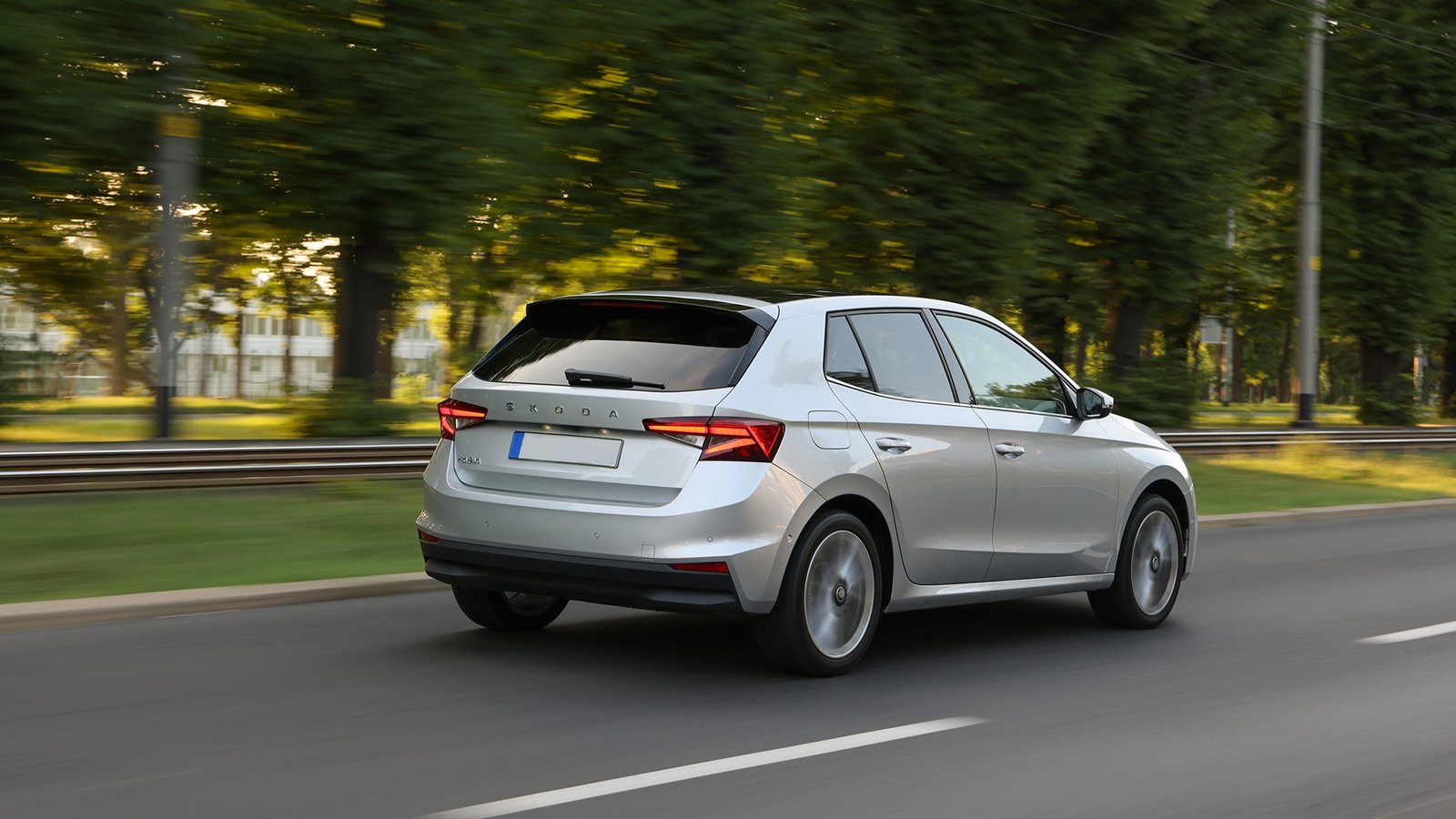
The new Skoda Fabia 2022 represents a major step forward for the Czech manufacturer, bringing more space, technology and premium features to one of Europe’s most popular small cars. The fourth-generation Fabia is 22 years on from the original model and shows just how far Skoda has developed under Volkswagen Group ownership.
The new Fabia was due to go on sale in the UK from 28 September 2021, with the first deliveries expected towards the end of the year. Prices started at £14,905, making it an appealing option for buyers looking for a well-equipped small car without spending a fortune.
The new Skoda Fabia 2022 was also the first generation to use Volkswagen Group’s MQB-A0 platform. This helped Skoda increase the car’s dimensions and interior space while introducing a wider range of safety, connectivity and driver-assistance technology.
So, which version should you buy, and does the new Skoda Fabia 2022 have enough to challenge established rivals such as the Ford Fiesta and Volkswagen Polo?
Which New Skoda Fabia 2022 Should I Buy?
The UK launch range consisted of four trim levels: S, SE Comfort, SE L and Colour Edition. A sportier Monte Carlo version was due to follow in early 2022.
There was also a choice of efficient petrol engines, ranging from the entry-level 1.0 MPI through to the more powerful 1.0 TSI. The 1.5 TSI 150PS engine was also part of the fourth-generation Fabia engine range, although the initial UK launch line-up focused on the smaller engines.
The Standard Fabia S
Starting at £14,905, the Fabia S was the cheapest way into the new generation.
However, calling it a basic car would be unfair. Even the entry-level model came with LED headlights, Lane Assist, Front Assist with pedestrian protection, DAB digital radio and a 6.5-inch colour infotainment display.
The entry-level 1.0 MPI engine produced 65PS and was paired with a five-speed manual gearbox.
This was clearly the engine for buyers prioritising affordability and simple urban driving rather than performance. With no turbocharger and modest power, it would be less convincing on faster roads or when carrying several passengers.
For a cheap runaround, however, the entry-level Fabia made a lot of sense.
Moving Up the Trim Levels
The SE Comfort and SE L versions added considerably more equipment while keeping the Fabia’s price relatively sensible.
The SE Comfort added features including 15-inch alloy wheels, front fog lights, rear parking sensors and a leather multifunction steering wheel.
The higher trim levels could also be specified with Skoda’s larger infotainment systems, digital instrumentation and additional driver-assistance technology.
The new Fabia could be equipped with features such as adaptive cruise control, blind-spot monitoring, lane assistance and traffic-sign recognition, depending on specification and options.
This was one of the areas where the new Skoda Fabia 2022 showed how much the supermini class had changed. Equipment that would once have been associated with much larger and more expensive cars was becoming available in small hatchbacks.
The 1.0 TSI: The Sensible Choice
The 1.0 TSI turbocharged engine was arguably the more appealing choice for buyers who expected to spend time outside the city.
The 95PS version was paired with a five-speed manual gearbox, while the 110PS version could be specified with either a six-speed manual or seven-speed DSG automatic.
The extra power of the 1.0 TSI made the Fabia better suited to motorway driving and overtaking than the entry-level 65PS MPI engine.
For many buyers, the 95PS or 110PS TSI would therefore offer a better balance between performance, economy and purchase price.
This makes the new Skoda Fabia 2022 particularly appealing to buyers who want a small car that can handle both urban driving and longer journeys.
The 1.5 TSI 150PS
At the top of the fourth-generation Fabia engine range was the 1.5 TSI, producing 150PS and paired with a seven-speed DSG automatic.
This four-cylinder engine was considerably more powerful than the three-cylinder 1.0-litre engines and used active cylinder technology to deactivate two cylinders under light loads to improve efficiency.
For buyers wanting the most performance from their Fabia, the 1.5 TSI was the obvious choice.
It was also a very different proposition from the entry-level model. The extra power and DSG transmission made it much better suited to faster roads, although the additional cost meant it was unlikely to be the choice for someone simply looking for an inexpensive city car.
For buyers who want more performance without moving into a larger car, the new Skoda Fabia 2022 with the 1.5 TSI is the most appealing option in the range.
What About the Fabia vRS?
One of the biggest disappointments for enthusiasts was the lack of a new Fabia vRS.
The previous Fabia vRS had established a following among drivers who liked the idea of a small, practical hatchback with genuine performance. There was therefore considerable interest in whether Skoda would revive the badge for the fourth-generation car.
However, there was no confirmed vRS for the new generation at launch.
The changing emissions landscape and Skoda’s increasing investment in electrification made developing a high-performance petrol Fabia more difficult to justify.
Instead, Skoda planned to offer the Fabia Monte Carlo as the sportier-looking version of the range. It would add a more aggressive appearance and additional equipment without becoming a full performance model.
Let’s Talk About the Overall Feel
The new Fabia’s MQB-A0 platform made a significant difference to the car’s proportions.
At 4,108mm long, the new Fabia was more than four metres long for the first time. The wheelbase also increased, helping create a more spacious cabin.
The boot was one of the Fabia’s biggest strengths. At 380 litres, it gained 50 litres over the previous generation and was exceptionally large for a supermini.
In fact, the new Fabia’s boot was large enough to compete with some bigger family hatchbacks for luggage capacity. It was one of the main reasons the car stood out against rivals such as the Ford Fiesta and Volkswagen Polo.
Inside, the new two-spoke steering wheel, free-standing infotainment screen and optional digital instrument display gave the cabin a much more modern appearance.
Skoda also continued its Simply Clever approach, adding practical touches designed to make everyday ownership easier.
The overall effect was a small hatchback that felt considerably more mature than its size suggested.
For a small family car, the new Skoda Fabia 2022 offered an impressive combination of passenger space, boot capacity and technology.
How Does the New Skoda Fabia 2022 Drive?
The new Fabia wasn’t designed to be a hot hatch, but that wasn’t necessarily a problem.
Its light steering made it easy to manoeuvre around towns and busy streets, while the compact dimensions made parking straightforward.
The suspension was also designed with everyday comfort in mind. Rather than being excessively firm, the Fabia provided a relatively composed ride over normal roads.
The stronger 1.0 TSI engines were the better choice for longer journeys. The 95PS and 110PS versions offered enough performance for motorway driving, while the 150PS 1.5 TSI provided a much more substantial performance step.
For drivers wanting a more dynamic experience, Skoda also offered a sports suspension option that lowered the car by 15mm and provided a firmer setup.
However, the standard Fabia was fundamentally designed as a comfortable and practical small car rather than a driver’s car.
New Skoda Fabia 2022 vs Ford Fiesta and Volkswagen Polo
The new Skoda Fabia 2022 entered one of the most competitive areas of the UK car market.
The Ford Fiesta had long been one of Britain’s best-known small cars, while the Volkswagen Polo offered a more premium approach from within the same Volkswagen Group family.
The Fabia’s major advantage was practicality.
Its 380-litre boot was extremely impressive for the class, while the increased dimensions provided plenty of useful interior space.
The Fabia also offered a generous equipment list and access to technology that would previously have been unusual in a car of this size.
This helped the new Skoda Fabia 2022 compete with more established superminis while offering a particularly strong combination of space and equipment.
It may not have had the sharpest driving experience in the class, but for buyers who valued space, comfort and practicality, the new Skoda Fabia 2022 had plenty going for it.
Our Verdict on the New Skoda Fabia 2022
The new Skoda Fabia 2022 represented a major step forward for the Czech manufacturer.
It brought a much more sophisticated design, modern technology, improved safety equipment and a significantly larger interior to the supermini class.
The entry-level 65PS engine was best suited to buyers looking for an affordable city car, but we’d be more tempted by one of the turbocharged 1.0 TSI engines for anyone expecting to regularly drive on faster roads.
The 95PS 1.0 TSI looked like a particularly sensible compromise, while the 110PS version offered more flexibility and the option of a seven-speed DSG automatic.
For buyers who wanted the most performance, the 150PS 1.5 TSI was the standout engine, although its higher price made it less attractive as a budget choice.
Ultimately, the new Fabia’s biggest strengths were its practicality, equipment and value for money. Its 380-litre boot, comfortable cabin and modern technology allowed it to punch above its weight against more established rivals.
Overall, the new Skoda Fabia 2022 remains an appealing choice for buyers prioritising practicality, comfort and value in a small car.
If you’re looking for a small car that is easy to live with but doesn’t feel particularly small inside, the new Skoda Fabia 2022 was one of the most interesting new cars of the period.
If you’re considering buying a Fabia or another used car, our guide on how to buy a used car safely covers the checks you should make before handing over your money. You can also browse used cars for sale on MotorHype.