With the cost of motoring continuing to put pressure on household budgets, finding ways to use less fuel can make a noticeable difference over time. The good news is that you don’t necessarily need to change your car to improve its fuel efficiency.
There are several straightforward ways to lower car emissions while also reducing the amount you spend on fuel. The way you drive, how well you maintain your vehicle and even what you carry in it can all affect how much fuel it uses.
If you’re looking for ways to lower car emissions and save money on fuel, these practical tips are a good place to start.
Reduce Unnecessary Car Journeys
One of the simplest ways to lower car emissions is to avoid unnecessary journeys.
If you can walk, cycle or use public transport for a short journey, you can avoid using fuel altogether. Where you do need to drive, try combining several errands into one trip rather than making multiple separate journeys.
Planning your route can also help. A longer route isn’t necessarily the most economical if it involves heavy traffic, frequent stops and repeated acceleration.
Of course, not every journey can be avoided, particularly for work, family commitments or longer-distance travel. The aim isn’t to stop using your car altogether, but to make the journeys you do take as efficient as possible.
Drive Smoothly
Your driving style has a significant effect on fuel consumption.
Hard acceleration, excessive speed and unnecessary braking all waste energy and can increase fuel consumption. Instead, try to anticipate what is happening further ahead and maintain a steady pace where traffic and road conditions allow.
Accelerate progressively rather than repeatedly making sudden bursts of acceleration. When approaching slower traffic, junctions or a red light, looking ahead can help you avoid unnecessary acceleration followed by heavy braking.
Driving smoothly can make your fuel go further while also helping to lower car emissions and reduce wear on components such as the brakes and tyres. The RAC’s fuel-saving advice also recommends avoiding unnecessary acceleration and braking.
Keep Your Car’s Tyres at the Correct Pressure
Checking your tyre pressures regularly is one of the simplest maintenance jobs you can do.
Under-inflated tyres increase rolling resistance, meaning the engine has to work harder to move the vehicle. This can increase fuel consumption as well as affecting handling and tyre wear.
Check your vehicle handbook or the manufacturer’s tyre-pressure information for the correct pressures. The recommended pressures may vary depending on how heavily the car is loaded.
It’s important not to deliberately over-inflate your tyres in an attempt to save fuel. Excessive pressure can affect grip, handling and tyre wear.
Maintaining the correct tyre pressure is therefore another practical way to lower car emissions without making major changes to your vehicle.
For more information, see our guide on how to check tyre sizes.
Keep Your Car Properly Serviced
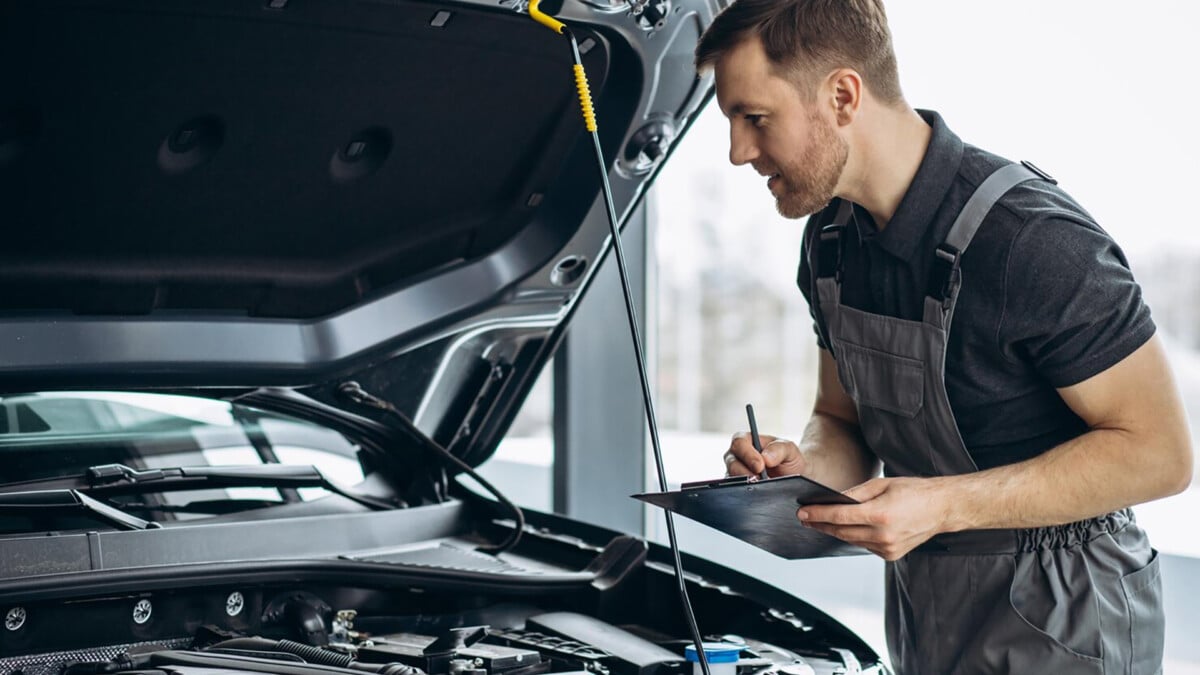
Regular maintenance can help your vehicle operate efficiently.
Engine oil needs to be changed according to the manufacturer’s recommended service schedule, and you should always use the correct specification of oil for your vehicle. Your handbook should provide the appropriate information.
Other maintenance items, including air filters, spark plugs on petrol engines and fuel-system components, should also be checked or replaced according to the manufacturer’s recommendations.
A poorly maintained vehicle may not operate as efficiently as it should, potentially increasing fuel consumption and emissions. Keeping up with routine maintenance can help lower car emissions and keep your vehicle running efficiently.
Regular servicing is therefore important not just for reliability, but also for maintaining efficiency and helping to lower car emissions.
You can also learn more about the different types of servicing in our guide to what a car service is.
Remove Unnecessary Weight
The heavier your car is, the more energy it needs to accelerate.
You don’t need to strip your car down to save fuel, but it is worth removing items you don’t regularly need. Tools, equipment, sports gear and other heavy objects left in the boot can all add unnecessary weight.
If you’re carrying something temporarily, such as luggage or equipment, remove it when you no longer need it.
While the effect may be relatively small on an individual journey, removing unnecessary weight is another simple way to lower car emissions over time.
Remove Unnecessary Roof Accessories
Roof boxes, roof bars and other external accessories can increase aerodynamic drag.
If you’re not using them, consider removing them rather than leaving them fitted permanently. The effect will vary depending on the vehicle and accessory, but reducing unnecessary aerodynamic drag can help improve efficiency.
This is particularly relevant on longer journeys and at higher speeds, where aerodynamic resistance becomes increasingly important.
Removing roof accessories when they are not needed can therefore help lower car emissions as well as reduce fuel consumption.
Avoid Excessive Engine Idling
Leaving your engine running while stationary uses fuel without moving the car.
If you’re stopped somewhere and don’t need the engine running, switching it off can avoid unnecessary fuel consumption and emissions. However, you should always consider safety and local circumstances, and follow the manufacturer’s guidance.
Modern cars may also have automatic stop-start systems that switch the engine off when the vehicle is stationary and restart it when you are ready to move.
Avoiding unnecessary idling is therefore another simple way to lower car emissions and reduce wasted fuel.
Use Air Conditioning Sensibly
Air conditioning and climate-control systems require energy, which can affect fuel consumption in petrol and diesel cars.
That doesn’t mean you should avoid using your air conditioning altogether. In hot weather, keeping yourself comfortable and alert is important, particularly on longer journeys.
Use the system sensibly and avoid running it unnecessarily when conditions don’t require it.
At higher speeds, opening the windows can also increase aerodynamic drag, so there isn’t always a simple rule that says windows-down driving will use less fuel than air conditioning.
Plan Your Journeys
Planning your route can help you avoid unnecessary mileage, congestion and repeated journeys.
If you have several errands to complete, consider whether you can combine them into one trip. You can also check traffic conditions before setting off and choose a sensible route rather than repeatedly getting caught in congestion.
Less time spent travelling and fewer unnecessary miles can mean less fuel used.
This doesn’t mean choosing the shortest route at all costs. A slightly longer route with smoother traffic may sometimes be more economical than a shorter journey involving constant stopping and starting.
Planning ahead can therefore help lower car emissions by reducing unnecessary mileage and time spent in traffic.
Choose Fuel-Efficient Tyres
Tyres can have an impact on fuel consumption as well as safety and handling.
When replacing your tyres, pay attention to the information on the tyre label, including its fuel-efficiency rating. Tyres designed to reduce rolling resistance can require less energy to keep moving.
However, fuel economy should not be the only consideration when choosing tyres. Grip, braking performance, wet-weather performance, durability and suitability for your particular vehicle are also important.
Always choose tyres that are appropriate for your car and use them at the manufacturer’s recommended pressures.
Choosing suitable tyres and keeping them correctly inflated can therefore be another small step towards helping to lower car emissions.
Don’t Drive Aggressively
Aggressive driving can quickly increase fuel consumption.
Repeated hard acceleration followed by heavy braking is inefficient and also puts additional strain on your vehicle.
Instead, look further ahead and anticipate changes in traffic. Maintaining a steady speed where appropriate and using the brakes smoothly can help you conserve fuel.
This approach can also make your driving more comfortable and reduce unnecessary wear on your brakes and tyres.
Combining smoother driving with good vehicle maintenance is an effective way to lower car emissions while also making your fuel go further.
Can Lower Emissions Also Save You Money?
In many cases, learning how to lower car emissions can also help you save money on fuel.
The two goals are closely connected because burning less petrol or diesel generally means producing fewer exhaust emissions from the vehicle.
Reducing unnecessary journeys, improving your driving style, maintaining correct tyre pressures and keeping your vehicle properly serviced can all help you use fuel more efficiently.
You don’t need to make every change at once. Even small improvements to your driving habits can add up over hundreds or thousands of miles.
Final Thoughts
Learning how to lower car emissions doesn’t have to mean making expensive changes to your vehicle.
Simple habits such as driving smoothly, checking your tyre pressures, removing unnecessary weight, planning journeys and keeping up with maintenance can help your car use fuel more efficiently.
These measures can also help reduce running costs, making them useful for motorists who want to save money as well as reduce the environmental impact of their driving.
The key is to combine several small changes rather than relying on one solution. If you can lower car emissions while using less fuel, you can reduce both the environmental impact of your driving and your motoring costs.
If your current vehicle is becoming expensive to run, you could also consider changing to a more economical model. MotorHype has a wide selection of used cars for sale from private sellers and dealers across the UK.