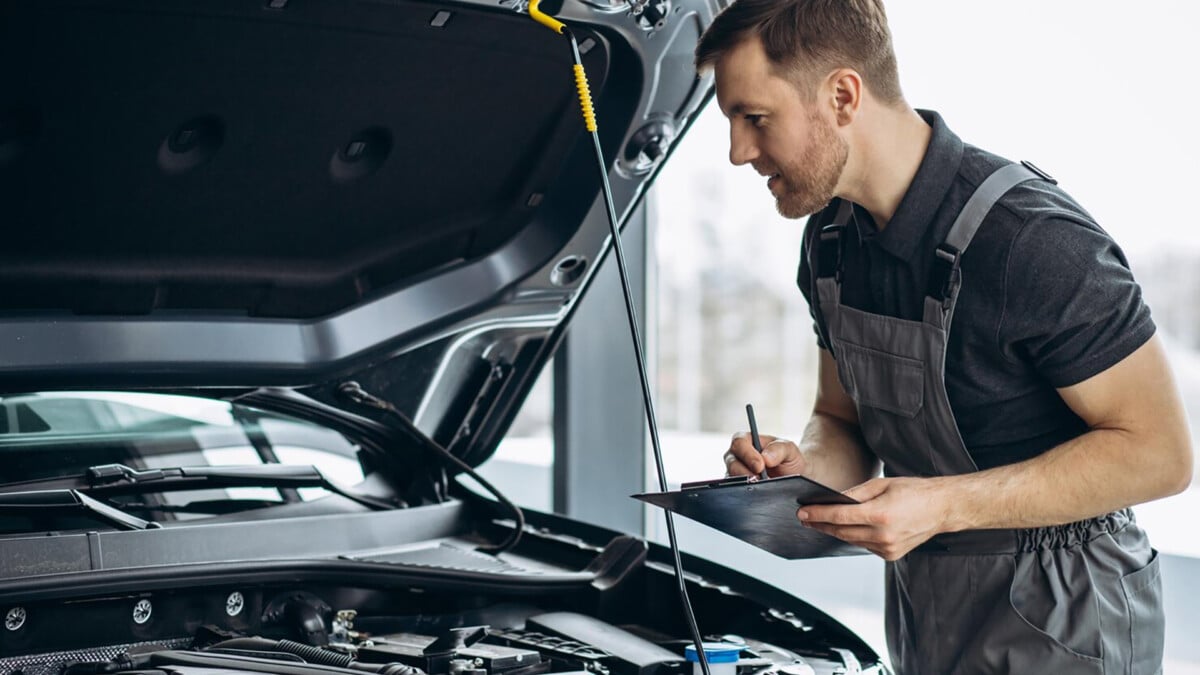
A car service is an important part of maintaining your vehicle. While an MOT checks whether your car meets certain legal safety and environmental standards, a car service is designed to assess the condition of the vehicle more broadly and carry out scheduled maintenance.
Regular servicing can help identify developing problems, keep important components working properly and maintain your car’s reliability. It can also help protect the vehicle’s service history, which may be useful when you eventually come to sell it.
But what actually happens during a car service, how often should you have one, and what is the difference between an interim and full service?
Why Is a Car Service Important?
A car service gives a mechanic the opportunity to inspect important parts of your vehicle and carry out maintenance recommended by the manufacturer.
The exact checks and replacements will vary depending on the car, its age, mileage, engine and manufacturer’s service schedule. However, regular servicing can provide several important benefits.
Maintenance and reliability
A car service can identify worn or deteriorating components before they develop into more serious problems.
Engine oil and filters, brakes, tyres, steering, suspension, lights and other components may all be checked depending on the service and vehicle.
Keeping on top of scheduled maintenance can reduce the risk of unexpected problems and help your car remain reliable.
Safety
A well-maintained car is important for road safety.
Brakes, tyres, steering, suspension, lights, windscreen wipers and other safety-related components can be inspected as part of servicing, although exactly what is included depends on the service schedule and garage.
Drivers are also responsible for making sure their vehicle is roadworthy, even if it has a current MOT.
Longevity
Regular maintenance can help prevent unnecessary wear and potentially catch faults before they become more expensive to repair.
Following the manufacturer’s maintenance schedule is particularly important because some components need to be replaced or inspected at specific mileage or time intervals.
Resale value
A complete service history can be useful when selling a car.
Potential buyers often want to know that a vehicle has been maintained properly, and evidence of regular servicing can provide reassurance about how the car has been looked after.
If you’re planning to sell your vehicle, our guide on how to sell a car has more advice on preparing your car for sale.
What Does a Car Service Include?
There isn’t one universal checklist for every car service. What is included depends on the vehicle manufacturer’s requirements, the type of service being carried out and the garage you use.
A typical car service may include checks or maintenance covering areas such as:
Engine oil and filters
Engine oil lubricates the engine’s moving components and helps reduce friction and heat.
A service may include an oil and oil-filter change, although the exact requirements depend on the manufacturer’s schedule.
Air filters, fuel filters and other filters may also need to be replaced at specific intervals.
Fluids
A mechanic may check fluid levels and condition, including:
- Engine coolant
- Brake fluid
- Windscreen washer fluid
- Engine oil
- Power steering fluid, where applicable
- Other vehicle-specific fluids
Not every fluid will necessarily be replaced during every service.
For more information, see our guide to choosing the right engine coolant for your car.
Brakes
The braking system is an important part of a car service.
Depending on the service, a mechanic may inspect brake pads, discs, brake lines and other components for wear or damage.
The handbrake or parking brake may also be checked.
Tyres
Tyres can be inspected for:
- Tread depth
- Correct inflation
- Uneven wear
- Cuts or other damage
- General condition
Tyre condition and pressure can have a significant effect on handling, braking and safety.
For more information, take a look at our comprehensive guide to checking tyre sizes.
Lights and electrical systems
A car service may include checks of headlights, brake lights, indicators, fog lights and other exterior lighting.
The battery and charging system may also be inspected, particularly where the service schedule calls for it.
Steering and suspension
Steering and suspension components can be checked for excessive wear, damage or other problems.
This can include components such as suspension arms, shock absorbers, springs and steering components, depending on the vehicle and service level.
Exhaust and emissions equipment
The exhaust system can be checked for visible damage, leaks and other problems.
On petrol and diesel vehicles, emissions-related components may also form part of scheduled maintenance or diagnostic checks.
Belts and other components
Some vehicles have specific replacement schedules for components such as timing belts, auxiliary belts and other parts.
These aren’t necessarily replaced during every service. Instead, the manufacturer’s schedule should be followed carefully because some maintenance items are time- or mileage-dependent.
How Often Should You Have a Car Service?
The correct service interval depends on the vehicle.
There is no single mileage or time period that applies to every car. Your owner’s handbook or manufacturer’s service schedule should tell you when the next service is due. Some newer vehicles also display a service reminder on the dashboard.
Many cars have service intervals around 12 months or 12,000 miles, but this is not a universal rule. Some manufacturers specify different intervals, and certain vehicles may use condition-based servicing.
Your driving conditions can also affect maintenance requirements. Frequent short journeys, towing, heavy loads, stop-start traffic and other demanding conditions may mean that your vehicle needs more frequent attention.
What about high-mileage drivers?
If you cover a particularly high annual mileage, you may need more frequent maintenance than someone who only drives a few thousand miles each year.
An interim service can be useful between full services, depending on the manufacturer’s recommendations and how the vehicle is used.
The important thing is to follow the manufacturer’s schedule rather than relying on a generic mileage figure.
What Is an Interim Service?
An interim service is generally a less comprehensive service designed to provide important maintenance and checks between more extensive services.
It commonly includes an engine oil and oil-filter change along with checks of key components such as brakes, tyres, lights, steering, suspension, battery and fluids.
The exact contents vary between garages and vehicles.
An interim service can be particularly useful for motorists who cover high mileages, but it should not automatically be treated as a replacement for the manufacturer’s full service schedule.
What Is a Full Service?
A full service is more comprehensive than an interim service.
Depending on the vehicle and garage, it can include an oil and filter change, checks of the brakes, tyres, steering, suspension, exhaust, battery, lights and other mechanical and safety systems.
Additional filters or components may also be replaced when they are due according to the manufacturer’s schedule.
A full service doesn’t mean every component on the car is replaced or checked in exactly the same way every year. Always ask the garage what is included and compare it with your manufacturer’s maintenance requirements.
What Is a Major or Manufacturer Service?
Some vehicles have more extensive manufacturer-specified maintenance at particular mileage or time intervals.
This may sometimes be referred to as a major service.
A major service can involve additional inspections or replacement of components that aren’t normally dealt with during a routine service.
Manufacturer servicing is particularly important for items with specific replacement intervals, such as some timing belts, spark plugs, fuel filters and other components.
The exact requirements depend on the vehicle, so the manufacturer’s service schedule should always be used as the reference point.
Car Service vs MOT: What’s the Difference?
A car service and an MOT are not the same thing.
For the official explanation of what an MOT checks, see the GOV.UK guide to the parts checked during an MOT.
An MOT is a legal test that checks whether a vehicle meets the required road safety and environmental standards. Most cars require their first MOT by the third anniversary of registration and then an MOT every year.
A car service, meanwhile, is routine maintenance intended to keep the vehicle in good working order.
The difference is important because passing an MOT doesn’t mean that your car doesn’t need servicing.
An MOT only assesses specific items against the legal testing standards. A service is concerned with the broader condition and maintenance of the vehicle.
In simple terms:
MOT: Is the vehicle meeting the minimum legal safety and environmental standards?
Car service: Is the vehicle being properly maintained according to its service requirements?
You can therefore have a car that has recently passed its MOT but is still due a service.
For more information, see our MOT test preparation checklist.
Do Electric Cars Need a Car Service?
Electric cars still need regular maintenance, although their servicing requirements differ from petrol and diesel vehicles.
An EV doesn’t have a conventional combustion engine, engine oil or spark plugs, for example.
However, components such as tyres, brakes, suspension, steering, lights, wipers and other systems still need inspection and maintenance.
The battery, charging system and high-voltage components may also have vehicle-specific inspection requirements.
The correct maintenance schedule will depend on the manufacturer and model, so EV owners should follow the servicing requirements provided with their vehicle.
What Happens If You Don’t Service Your Car?
Skipping a scheduled car service can mean that developing problems go unnoticed for longer.
This doesn’t mean a vehicle will immediately break down because a service is overdue, but delaying maintenance can increase the risk of wear-related problems becoming more serious.
It can also mean that important manufacturer-specified maintenance is missed.
If your dashboard shows a service warning or your vehicle is due according to its service schedule, it’s worth arranging the necessary maintenance rather than simply waiting for the next MOT.
Should You Service Your Car Before an MOT?
A service isn’t legally required simply because your MOT is due.
However, having your car serviced around the same time can be useful because a service may identify maintenance issues that aren’t part of the MOT.
An MOT only assesses specific items against the legal testing standards. A service is concerned with the broader condition and maintenance of the vehicle.
If you know your car needs work, it’s sensible to have any necessary repairs completed before the MOT rather than assuming a service and MOT are interchangeable.
Keeping a Complete Service History
Keeping records of your car’s servicing is a good habit.
Keep invoices, service receipts and other documentation showing what work has been carried out and when.
For newer vehicles, digital service records may also be maintained by the manufacturer or servicing garage.
A complete history can help you keep track of maintenance and may make the car more attractive to potential buyers when you eventually sell it.
If you’re buying a used car, checking its service history alongside its MOT history can also help you understand how it has been maintained.
Final Thoughts
A car service is an important part of responsible vehicle ownership. It helps ensure that scheduled maintenance is carried out and gives you an opportunity to identify potential problems before they become more serious.
The exact contents and interval will depend on your vehicle, so don’t rely on a generic 6,000- or 12,000-mile rule without checking the manufacturer’s recommendations.
Remember that an MOT and a car service have different purposes. An MOT is a legal test, while servicing is about maintaining the vehicle and following its recommended maintenance schedule.
Keeping up with both can help you maintain a safer, more reliable and better-maintained car.
And when the time eventually comes to replace your vehicle, you can sell your car through MotorHype and start looking for your next one.