Choosing the right engine coolant for your car is an important part of looking after your engine. Coolant helps control engine temperature, protects against freezing and contains additives designed to protect the cooling system from corrosion.
For many drivers, choosing the right engine coolant is something they only think about when the coolant level is low, but it is worth getting right before a problem occurs.
Getting the wrong coolant can cause problems, particularly if incompatible fluids are mixed. That’s why it’s important to check your vehicle manufacturer’s specification rather than simply choosing a coolant because it looks the same colour as the fluid already in your car.
Whether you’re driving a small hatchback, family SUV, sports car or classic, choosing the right engine coolant can help keep the cooling system working as it should.
Why Does Engine Coolant Matter?
Engine coolant, often referred to as antifreeze, circulates through the engine and cooling system to help regulate temperature.
It performs several important jobs:
- It helps carry excess heat away from the engine.
- It provides protection against freezing in cold temperatures.
- It raises the boiling point of the cooling mixture.
- It contains corrosion inhibitors that help protect components within the cooling system.
- It helps maintain reliable engine temperatures during normal driving and heavier use.
Modern engines rely on an effective cooling system to maintain the correct operating temperature. A coolant problem can therefore become much more serious than simply having a low fluid level.
GOV.UK guidance on checking your vehicle explains that your vehicle’s handbook should tell you how often to check the water level in the radiator or expansion tank, as well as other important maintenance requirements.
What Are the Different Types of Engine Coolant?
There are several different coolant technologies, and choosing the right engine coolant means matching the product to your vehicle’s requirements.
Understanding the different coolant technologies is an important part of choosing the right engine coolant for your vehicle.
The three broad categories you’ll commonly hear about are IAT, OAT and HOAT.
Inorganic Additive Technology (IAT)
IAT is an older type of coolant that uses inorganic additives to provide corrosion protection.
It has traditionally been associated with older vehicles, although the exact coolant specification depends on the vehicle and manufacturer.
IAT coolants generally have shorter service lives than many modern long-life formulations, but you should always follow the replacement interval specified for your particular vehicle rather than relying on a generic figure.
Organic Acid Technology (OAT)
OAT coolants use organic acid additives for corrosion protection and are widely used in modern vehicles.
They are generally designed to provide longer-lasting protection than traditional IAT formulations, but there are many different specifications within the wider OAT category.
That means simply buying an OAT coolant isn’t necessarily enough. The product still needs to meet the specification required by your vehicle.
Hybrid Organic Acid Technology (HOAT)
HOAT coolants combine aspects of different corrosion-inhibitor technologies.
Again, there isn’t one universal HOAT formula that is suitable for every car. Manufacturers can specify different additive packages and standards depending on the engine and cooling-system materials.
This is why choosing the right engine coolant is ultimately about finding the correct specification, rather than just identifying whether the product is IAT, OAT or HOAT.
Does Coolant Colour Matter?
This is one of the biggest sources of confusion when choosing the right engine coolant.
You may see coolant sold in colours including:
- Blue
- Green
- Pink
- Red
- Orange
- Yellow
- Purple
However, colour should not be used as a reliable way of identifying coolant compatibility.
Historically, particular colours were often associated with particular formulations, but coolant manufacturers now use different colours for different products. The same colour can therefore represent different technologies or specifications.
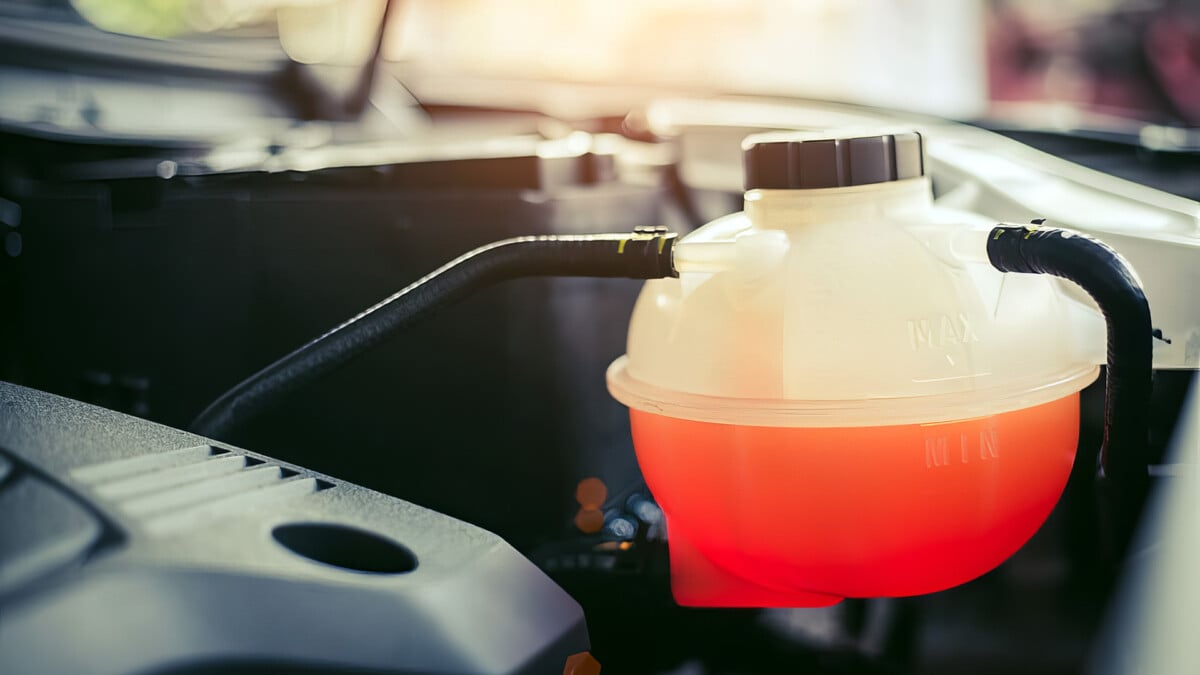
In other words, if you open the bonnet and see pink coolant in the expansion tank, that doesn’t automatically mean you should buy another pink coolant.
The important information is the coolant specification approved for your vehicle.
Prestone’s coolant colour guide explains why colour alone should no longer be relied upon when identifying coolant.
How Do You Know Which Coolant Your Car Needs?
The safest approach to choosing the right engine coolant is surprisingly simple: check your vehicle manufacturer’s recommended specification.
If you’re choosing the right engine coolant for the first time, your owner’s handbook is the best place to start.
Start with your owner’s handbook. It should tell you what type or specification of coolant is suitable for the engine.
You can also check the vehicle manufacturer’s official information or speak to a qualified garage if you’re unsure.
Some coolant products are designed to meet particular manufacturer standards, while others are marketed as compatible with a wide range of vehicles. Don’t assume that a product is suitable simply because the label says it is suitable for your type of engine.
If you’re buying a used car and don’t know what coolant is currently in the system, this is particularly important. The colour of the existing fluid may not tell you what specification it is.
When choosing the right engine coolant, always give the manufacturer’s specification priority over the colour, brand or generic description printed on the bottle.
Can You Mix Different Coolants?
This is where you need to be careful.
Different coolant formulations aren’t necessarily compatible, so you shouldn’t mix two products simply because they are the same colour or because both are described as antifreeze.
Choosing the right engine coolant also means checking that the replacement product is compatible with what the manufacturer specifies.
Mixing incompatible products can reduce the effectiveness of the corrosion protection and, depending on the products involved, can potentially cause deposits or other cooling-system problems.
If you’re unsure what is already in the system, check the vehicle specification before topping it up.
If the wrong coolant has already been added, or you’re changing from one coolant specification to another, a cooling-system flush may be appropriate. A garage can advise on the best approach for your particular vehicle.
The important point is that choosing the right engine coolant is better than trying to work out compatibility after different products have already been mixed.
How to Check Your Coolant Level
Checking the coolant level is one of the easier maintenance jobs you can carry out yourself.
However, never remove a coolant or expansion-tank cap while the engine is hot. The cooling system can be pressurised and hot coolant can cause serious burns.
Instead:
- Park the car safely and allow the engine to cool completely.
- Locate the coolant expansion tank using your owner’s handbook if necessary.
- Check the coolant level against the minimum and maximum markings.
- If the level is low, establish which coolant specification your vehicle requires before topping it up.
- Don’t overfill the expansion tank.
- Replace the cap securely once you’ve finished.
If the level repeatedly falls, don’t simply keep topping it up. A cooling system that continually loses coolant needs investigating.
What Should Coolant Look Like?
Coolant can naturally come in a variety of colours, so colour alone isn’t necessarily a sign that something is wrong.
However, you should pay attention to obvious changes in the condition of the fluid.
If the coolant appears unusually:
- Brown or rusty
- Cloudy
- Contaminated
- Full of particles
- Oily
it is worth having the cooling system inspected.
Likewise, if you notice coolant leaking underneath the car or around hoses, the radiator or expansion tank, it should be investigated.
A coolant leak can quickly turn into an overheating problem if enough fluid is lost.
How Often Should Engine Coolant Be Changed?
There isn’t one universal coolant replacement interval that applies to every car.
Some modern coolant formulations are designed to last for many years, while other vehicles require more frequent replacement.
The correct interval depends on the vehicle, coolant specification and manufacturer’s maintenance schedule.
That’s why choosing the right engine coolant also means following the correct service interval for your particular car.
If you’re unsure, check the handbook or ask a qualified garage.
Don’t automatically change coolant every two years, five years or another fixed period simply because someone has recommended it as a general rule.
Ready-Mixed or Concentrated Coolant?
Engine coolant can be supplied as either ready-mixed coolant or concentrated antifreeze.
Ready-mixed coolant is already diluted to the manufacturer’s specified concentration and can generally be added directly to the cooling system.
When choosing the right engine coolant, make sure you know whether you are buying a ready-mixed product or a concentrate.
Concentrated coolant needs to be diluted with the correct amount of water before use. Many concentrated products use a 50:50 mixture, but always follow the instructions on the particular product and the vehicle manufacturer’s requirements.
Don’t assume that adding extra water is harmless. The correct mixture is important for both freeze protection and cooling-system performance.
Signs Your Cooling System Needs Attention
A cooling-system problem can sometimes give you plenty of warning.
Look out for:
- The engine temperature rising higher than normal.
- A coolant warning light appearing on the dashboard.
- Steam coming from the engine bay.
- A sweet smell around the engine bay.
- Visible coolant underneath the vehicle.
- The coolant level repeatedly dropping.
- Gurgling or unusual noises from the cooling system.
- The engine overheating.
- A heater that suddenly stops producing warm air in some circumstances.
If you notice any of these symptoms, choosing the right engine coolant may be only part of the solution, as the underlying cooling-system problem should also be investigated.
If the engine is overheating, don’t simply continue driving and hope the problem goes away. Stop somewhere safe and allow the vehicle to cool before investigating further.
If you’re also trying to understand the warning lights on your dashboard, our guide to 5 dashboard warning lights you must know is worth reading.
Choosing the Right Engine Coolant: A Simple Checklist
If you’re standing in a motor factors looking at several different bottles, choosing the right engine coolant doesn’t need to be complicated.
These simple checks make choosing the right engine coolant much easier and reduce the chance of using an unsuitable product.
Use this checklist:
- Check your owner’s handbook for the required coolant specification.
- Don’t choose based on colour alone.
- Check the product specification rather than relying solely on broad terms such as OAT or HOAT.
- Don’t mix incompatible coolants.
- Check whether the product is ready mixed or concentrated.
- Follow the recommended dilution ratio if using concentrate.
- Check the coolant level when the engine is cold.
- Investigate repeated coolant loss rather than continually topping up.
- Follow the manufacturer’s replacement interval.
- Get professional advice if you aren’t sure what is already in the cooling system.
Taking a few minutes to check the specification before buying can make choosing the right engine coolant much easier and help prevent an expensive mistake.
Don’t Ignore Your Cooling System
Choosing the right engine coolant is a relatively simple part of car maintenance, but getting it wrong can have expensive consequences.
The most important thing to remember is that coolant colour isn’t a reliable compatibility guide. Your vehicle’s manufacturer specification should always take priority.
Keep the coolant at the correct level, check for signs of leaks or contamination and follow the recommended maintenance schedule.
It’s also worth keeping your wider maintenance up to date. Our guide explaining what a car service is covers the other routine checks that help keep your vehicle running properly.
And if you’re buying a used car, checking the cooling system is another useful part of assessing the vehicle before you hand over your money. Our guide to buying a used car safely covers more of the checks worth making.
You can also learn more about reducing unnecessary fuel use in our guide to how to be more fuel efficient when driving.
Whether you’re maintaining the car you already own or looking for your next vehicle, you can also browse used cars for sale on MotorHype.