Choosing the right engine coolant for your car isn’t just a box‑tick on your service schedule — it’s a vital part of protecting your engine, maintaining performance, and avoiding costly damage. Here at MotorHype we know that whether you’re driving a classic hatchback, a sports coupe, or a family saloon, understanding your cooling system is key to staying on the road.
Why Coolant Matters More Than You Think
Engine coolant — sometimes called antifreeze — does three crucial jobs:
- It helps the engine shed excess heat, preventing overheating.
- It lowers the freezing point of the fluid to avoid damage in colder weather.
- It contains additives that stop corrosion in the cooling system’s metals and alloys.
Use the wrong coolant, or ignore checking the level, and you might be looking at a cracked cylinder head, weakened radiator or a cooling‑system failure.
Different Types of Coolant and What They Mean
Not all coolants are the same. Here are the main types and what you should know:
- Inorganic Additive Technology (IAT) – Often green or blue in older cars. Traditional formula with silicates and phosphates. Lasts around 2–3 years or 45,000 miles in many UK cars.
- Organic Acid Technology (OAT) – Usually orange, red or pink. Uses organic acids instead of silicates. Common in newer vehicles and offers longer service life (5 years plus).
- Hybrid Organic Acid Technology (HOAT/P‑HOAT) – A mix of the above to provide broad metal protection for modern engines; colours vary (yellow, purple) depending on maker.
Key take‑away: Always check your vehicle’s handbook for the correct specification. Mixing types, or using the wrong type, can lead to serious issues.
Coolant Colour Explained
You may have spotted green, red, orange or blue coolant in the tank — but the colour alone doesn’t guarantee compatibility! For example:
- Green/blue typically means older IAT formula
- Orange/red often point to OAT
- Yellow/pink might signal HOAT
However, colour standards vary by manufacturer and mixing remains risky. Always rely on your handbook or a trusted source.
How to Check & Maintain Your Coolant
Keeping your coolant in good shape doesn’t have to be complex. Here’s what you should do:
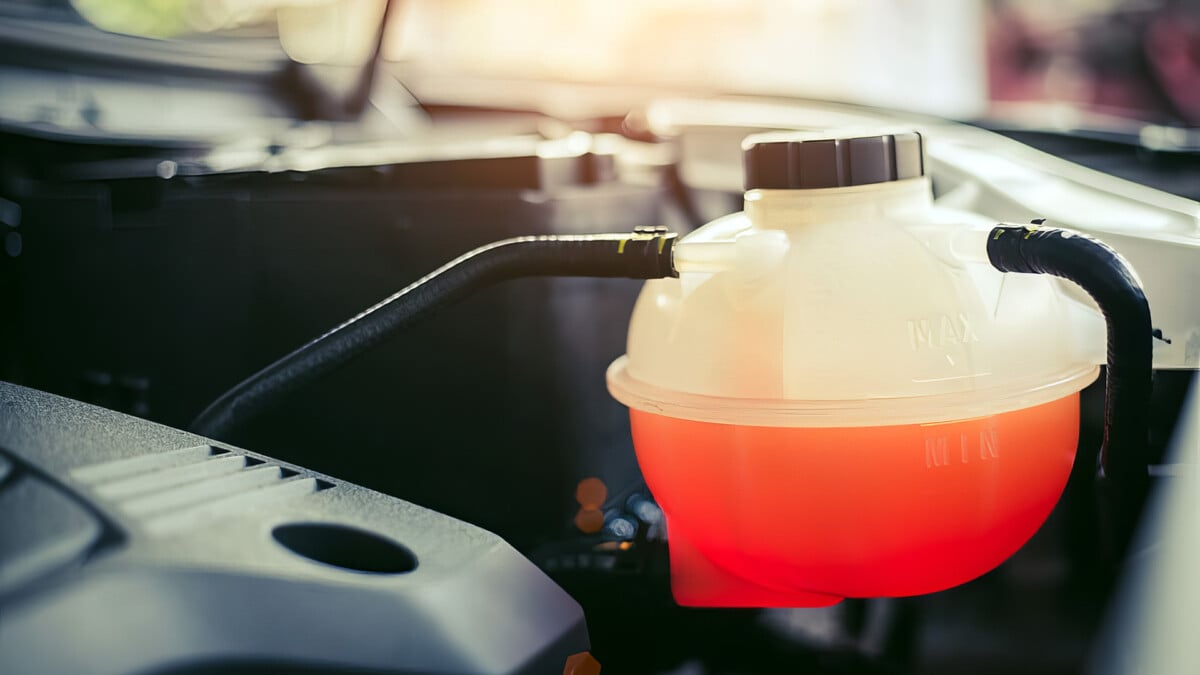
- Check the level: While the engine is cold, inspect the expansion tank and ensure the fluid is between the “Min” and “Max” marks.
- Inspect the colour and condition: If the fluid is rusty, muddy or has floating particles — get it checked.
- Follow the service interval: Many modern vehicles require coolant changes every 5 years or more, others sooner.
- Use correct dilution: Many manufacturers recommend a 50/50 mix of coolant concentrate and distilled water. Too much water weakens performance.
- Don’t top up with random liquids: Only use the correct coolant type — using plain water, or the wrong coolant, increases risk of corrosion, deposits and overheating.
Signs Your Cooling System Needs Attention
If you notice any of the following, it’s time to take action:
- The engine runs hotter than usual on warm days.
- You see steam or smell coolant from the engine bay.
- The coolant reservoir keeps losing fluid (without external leaks).
- You hear gurgling or bubbling from the cooling system — often a sign of trapped air or contamination.
- Your coolant appears brown, cloudy or has an oily film.
Which Coolant for Which Car? A Practical Checklist
Whether you drive a daily hatchback or a classic collector car, use this checklist:
Check the handbook: Look up the coolant spec (e.g., G11, G12+, C‑whatever) for your car’s make and year.
Match the vehicle age/type: Older cars often use IAT; modern ones demand OAT or HOAT.
Avoid mixing types: Unless a universal coolant clearly states compatibility, don’t combine.
Use correct level and mix ratio: Stick to the mark and dilution advised.
Flush if in doubt: If you’re switching types or the existing coolant is old/degraded, a system flush may be necessary to avoid damage.
Final Thoughts
At MotorHype we believe maintaining your vehicle’s cooling system is just as important as engine oil changes or brake servicing. The right coolant protects against overheating, corrosion, and freezing — a small cost for big value.
Whether you’re checking a used car for sale or preparing your daily driver for the year ahead, don’t ignore the cooling system. Use the right product, follow the manufacturer’s recommendations, and you’ll keep your engine “cool” in more ways than one.
Plus, if you’re in the market for a vehicle, MotorHype makes it easy to browse and find used cars for sale across a wide range of makes and models, helping you find the perfect car to suit your needs.